Burke says she also wants to shift the focus back to survivors. “At the end of the day, there is a body of work that we’re building to help those people who have their hands raised. And I’m proud of that.”
“transmed cishet” oh? you mean a transphobe? you mean a normal cis person? you mean a regular ass cis person who thinks they have any right to an opinion about trans people? tell me more
Here’s a list of some things we can do, and most pressingly, if you’re in MA vote YES on 3 and tell everyone you know.
“Bring Attention to YES ON 3 in Massachusetts. There’s a ballot initiative coming to a vote on November 6 in Massachusetts that would repeal protections for transgender and nonbinary people in public accommodations. This is the first statewide vote to strip trans people of their rights ever — and it would take away protections won in the legislature after decades of fighting to explicitly extend these protections to trans people.”
The Trump Administration is trying to define us trans folk out of existence- but we DO exist, we HAVE existed, and we sure as hell will CONTINUE to exist! Please, make sure you get out and vote, bring attention to trans voices, and support us wherever you can!
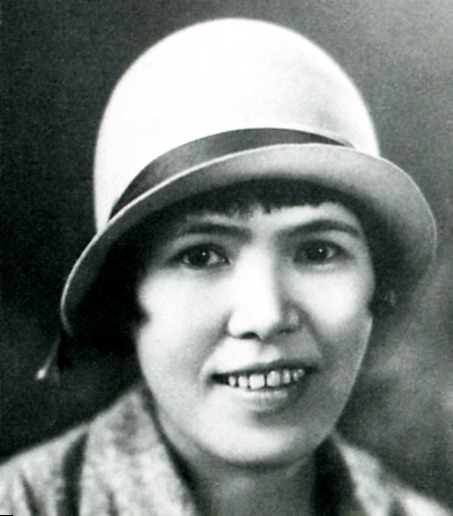
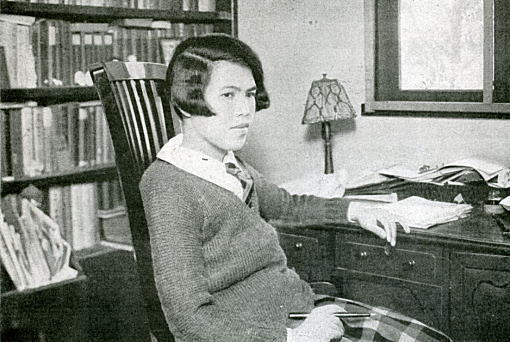
Nobuko Yoshiya! Out and proud lesbian! Author of lesbian lit
& stories with titles like “Husbands Are Useless”! What’s not to love about
her?
Her middle-class, conservative background did not
necessarily predispose her to become the lesbian icon she’s known as today, but
Nobuka Yoshiya never quite seem to fit the role of the good, dutiful wife she
was supposed to take on. She developed early on a love of reading and writing
that came in the way of her learning domestic skills (who can relate?). When
she moved to Tokyo in 1915, she started breaking away more visibly from gender
norms and expectations: she adopted a more androgynous style, cutting her hair
short (thus also emulating Western fashion of the 20s), she traveled
extensively, and she’s recognized as one of the first Japanese women to own a
car and a racehorse. She loved horse racing and golf, and designed her own
house, which became the Yoshiya Nobuko Memorial Museum after her death (but if
you want to go see it, make sure to plan in advance: it’s open only twice a
year, in early May and November, for three days each time).
Even though she was one of 20th-century Japan’s
most popular, commercially successful and prolific writers, there’s not a whole
lot of scholarly work on her or translations of her writings, at least in the English-speaking
Western world – perhaps because the bulk of her writing was serialized romance and
teen girls’ novels, and thus not seen as a contender for the ‘serious
literature’ category. Even so, she enjoyed an especially broad readership among
young women; she pioneered the Class S genre – which refers to literature dealing
with strong friendships and romance between schoolgirls – and was influential
in developing shōjo (schoolgirl) anime,
manga, and literature.
Yoshiya was in a lifelong partnership with Chiyo Monma, a
math teacher in Tokyo whom she met in 1923. Their life together was no secret,
and Yoshiay openly talked about it in personal essays and magazine interviews. Their
relationship was both romantic and professional, as they worked together as
author and secretary. Since same-sex marriage was not possible in Japan,
Yoshiya adopted Monma in 1957: this was the only legal way that made it
possible for lesbians to share property and make medical decisions for each
other – in short, to be recognized as family for each other. Their relationship
only ended with Yoshiya’s death in 1973.
(I STILL can’t get over the “husbands are useless” thing.)




 Lesbian On Main